
Executive function · K2 to Primary 1
Executive Function: Why It Matters for Primary 1 Readiness
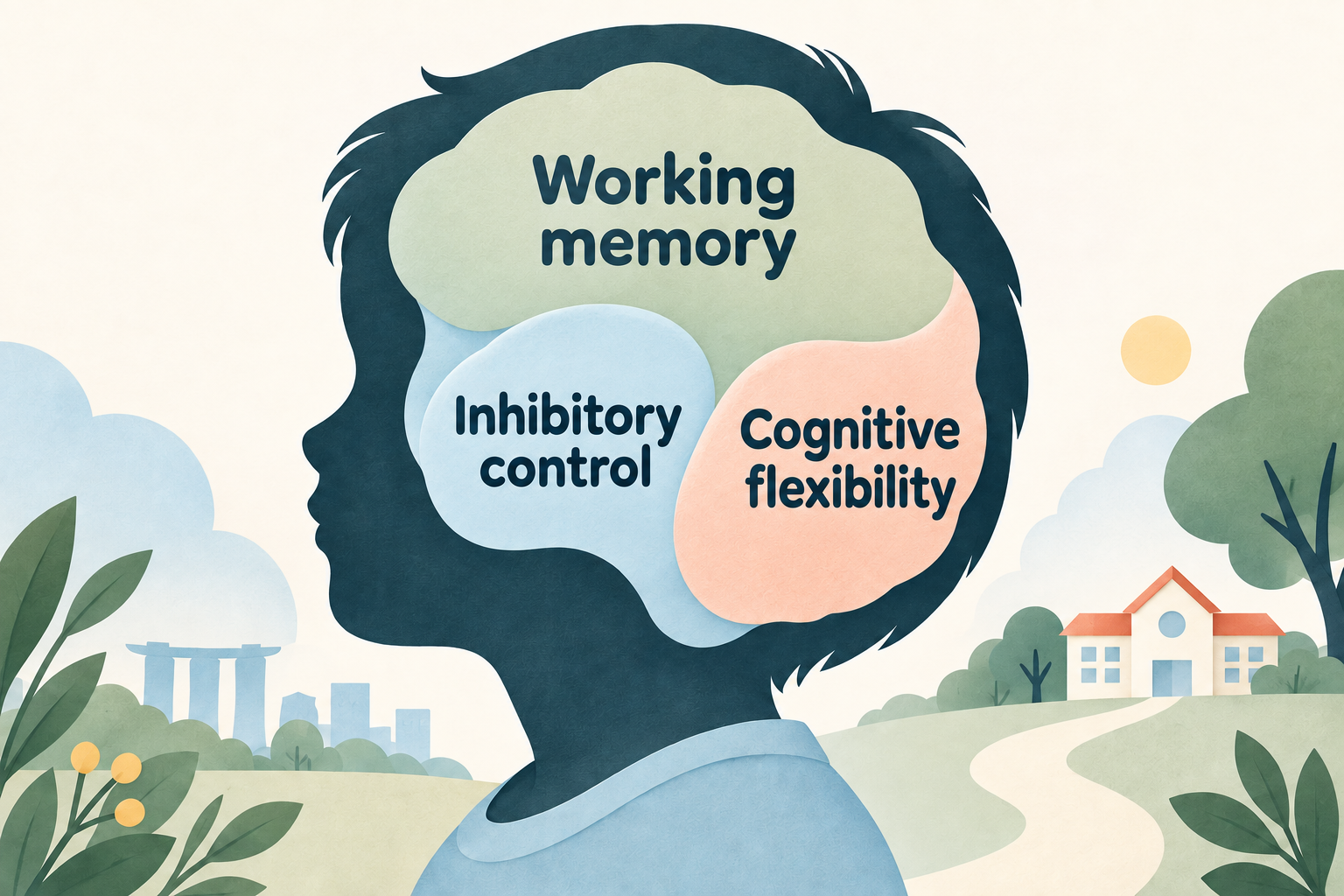
Following an explanation. Remembering the next step. Returning after a distraction. Trying another approach when something is new. These are skills children use to learn—not just to show what they already know.
These draw on executive function: holding and using information, managing impulses and attention, and adjusting our thinking. They matter in lessons, routines and friendships—even for children already excelling academically.
Singapore’s Ministry of Education (MOE) recognises executive function as part of children’s readiness to learn and navigate school life. A US preschool study also linked working memory and attention control with growth in early literacy and numeracy.
Three skills in everyday school life
1. Working memory — remembering what to do while doing it
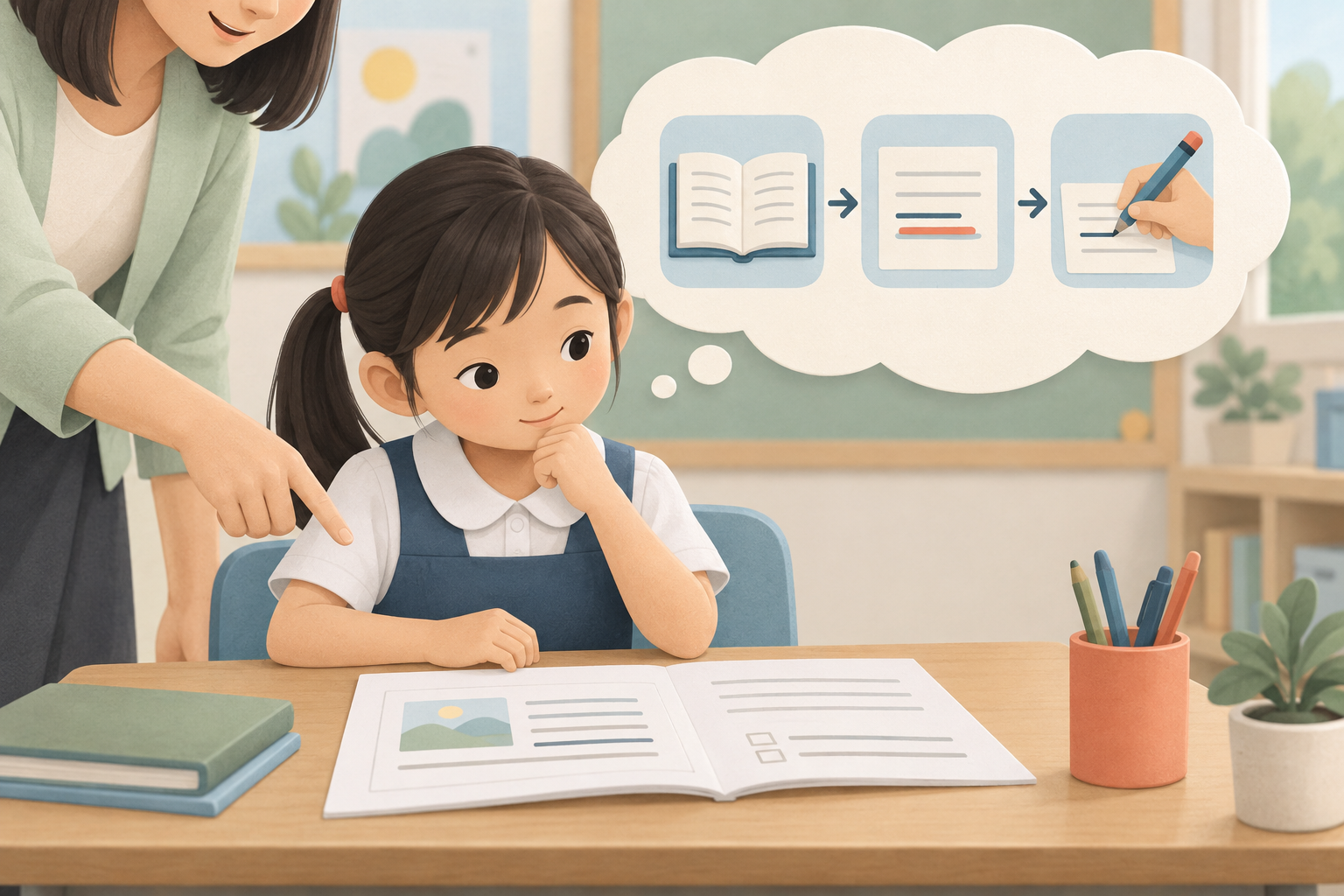
“Put your book in your bag, collect your water bottle and line up.”
Working memory helps a child keep the next steps in mind while completing the first. It also helps them hold a sentence idea while spelling its words. Understanding the task does not always mean remembering every step.
Try this: Teach your child to repeat the steps back and check what comes next. If they lose track, practise asking: “I’ve packed my book. What do I need next?”
Make a packing checklist together and let your child check it before you step in. Like writing down homework, it supports organisation and reduces the load on memory.
2. Inhibitory control and attention — pausing, focusing and coming back
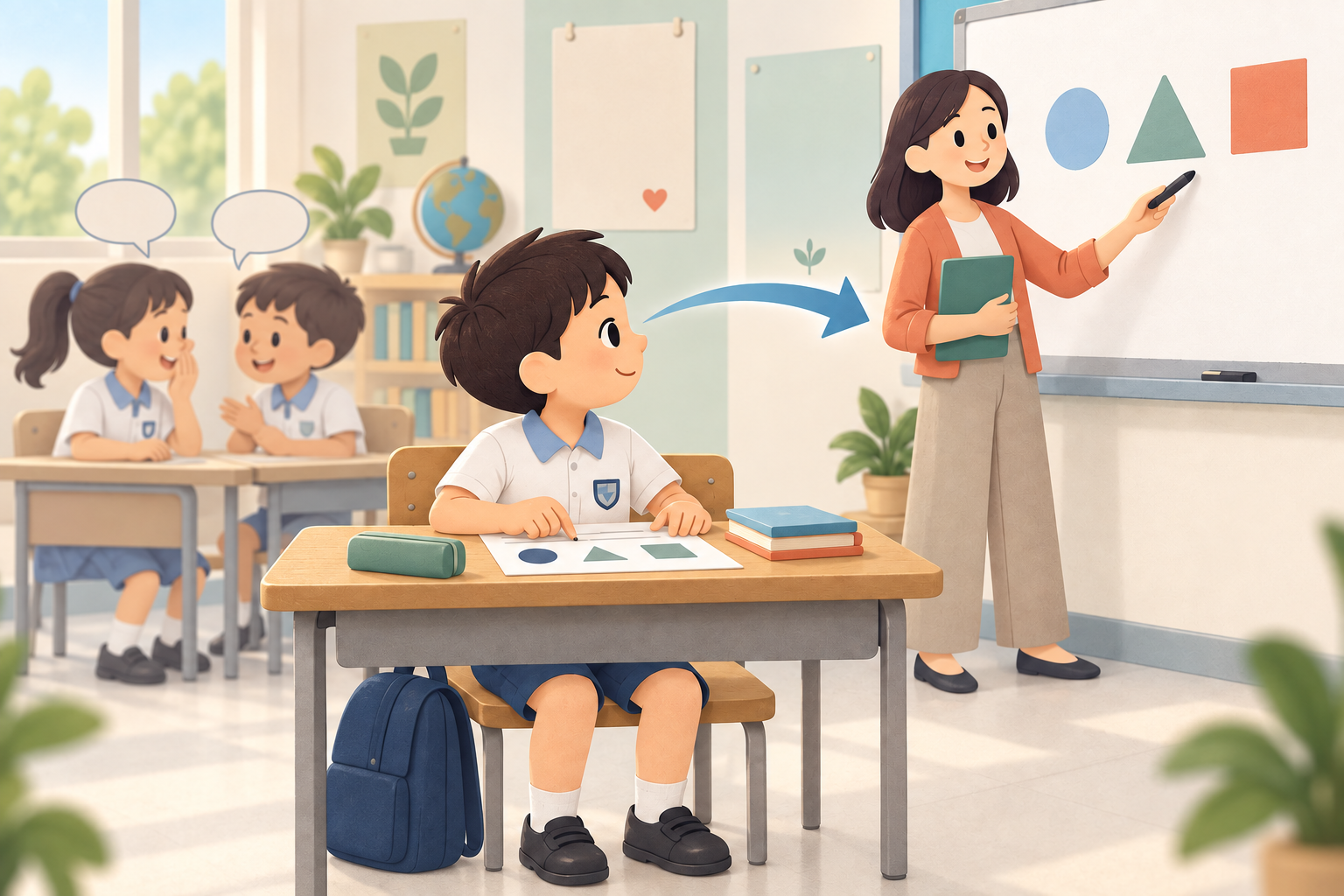
A child knows the answer but interrupts. Another rushes through familiar work, skipping instructions. A third gets distracted, then finds their place and continues.
Inhibitory control helps children pause an impulse and resist distractions. The aim is thoughtful attention and learning to return—not sitting perfectly still or concentrating without interruption.
Try this: Agree on a manageable amount: “Two sentences, then read them back.” Notice thoughtful checking, not just speed or pages finished.
If restlessness builds, help your child ask for a short movement break and agree where to restart. Recognising that need is broader self-regulation; the return to the task matters too.
3. Cognitive flexibility — finding another way forward
“What else could we try?”
- Our first idea
Create a ball game together.
- The challenge
There is no equipment available.
- A different idea
Try a classmate’s movement game—and agree on the rules together.
Imagine a PE group creating a game. They want a ball game, but no equipment is available. A classmate suggests a follow-the-leader movement game instead.
Cognitive flexibility helps a child move beyond “but that was my plan” and consider another workable idea. It is not simply giving in: children can compare suggestions and agree on a plan together.
Disappointment is understandable. Managing that feeling involves emotional regulation; reconsidering the plan draws on flexibility.
In schoolwork, it might mean trying another taught spelling or drawing a maths problem when mental calculation is not helping. Children need strategies taught before they can choose between them.
Try this: Ask, “What else could we try?” Hear each person’s idea, choose one together and test it.
How language activities can give children practice
Language activities can draw on the same skills as routines, play and group work:
| Activity | Working memory — hold and use information | Inhibitory control — pause before acting | Cognitive flexibility — reconsider and adjust |
|---|---|---|---|
| Story sequencing | Hold story events in mind while putting them in order. | Pause before blurting out an event; check which part of the story the question asks about. | Revise the order after looking back at a picture or hearing a reminder. |
| Spelling | Hold the word in mind while choosing letters for each sound. | Resist writing the first spelling that comes to mind without checking it. | Consider another taught spelling when the first attempt needs reconsidering. |
| Sentence scrambles | Hold a possible sentence in mind while arranging the words. | Resist putting words down without checking whether the sentence makes sense. | Try a different word order when the first arrangement does not make sense. |
These are practice opportunities—not diagnostic tests or guarantees of improvement across other tasks.
Confidence comes from finding a way forward

At Euphoria, we look beyond correct answers: following an explanation with fewer prompts, checking an attempt, using a taught strategy and trying again when something does not work.
The aim is not simply familiarity with worksheets. When children see their own thinking lead to progress, they can feel more confident about the next challenge. They do not need to be top of the class to enjoy learning.
Children do not need these skills fully developed before P1. They need clear teaching, manageable challenges and support that gradually reduces. Preparing for P1 means building knowledge—and the ability to listen, remember, pause and adapt as they learn something new.
Sources and further reading
- Singapore’s Ministry of Education: holistic development and readiness to learn
- Welsh and colleagues: working memory, attention control and early academic growth in US preschool children
- Adele Diamond: executive functions
- Harvard Center on the Developing Child: age-appropriate executive-function activities